Every business wants more leads, but generating leads is only half the battle. Understanding where those leads come from is what enables sales and marketing teams to invest in the right channels, improve conversions, and grow revenue efficiently.
Most CRMs are great at tracking website forms, paid advertisements, and email campaigns. However, some of the highest-quality opportunities often originate from sources that receive little or no attribution.
Here are five lead sources that many sales teams overlook—and why ignoring them creates blind spots in your sales pipeline.
1. Referrals
Referral leads consistently outperform many traditional acquisition channels because they come with an existing level of trust. Whether the referral comes from a customer, business partner, employee, or industry contact, these leads often have shorter sales cycles and higher conversion rates.
Unfortunately, many businesses simply mark these leads as "Direct" or "Manual Entry."
Instead, capture details such as:
- Who referred the lead
- Customer vs. partner referral
- Referral campaign (if applicable)
- Revenue generated from referrals
Tracking referrals helps identify your strongest advocates and makes it easier to build successful referral programs.
2. Walk-In Inquiries
Not every customer discovers your business online.
Educational institutions, healthcare providers, retail stores, service businesses, and local offices often receive walk-in inquiries that never make it into the CRM until much later—or sometimes not at all.
Recording walk-in leads allows businesses to:
- Measure offline demand
- Identify busy locations
- Compare online vs. offline acquisition
- Improve staffing during peak hours
Without tracking them, valuable opportunities disappear from reporting.
3. Cold Calls
Outbound prospecting remains an important lead generation strategy for many B2B organizations.
Sales representatives spend hours making calls, yet once a prospect becomes an opportunity, the original lead source is often forgotten.
Proper attribution allows teams to evaluate:
- Cold call effectiveness
- Call-to-meeting conversion rates
- Representative performance
- Industries responding best to outreach
When outbound activity isn't tracked properly, businesses struggle to determine whether their sales development efforts are delivering results.
4. Events & Networking
Trade shows, conferences, seminars, webinars, business meetups, and networking events continue to generate valuable business relationships.
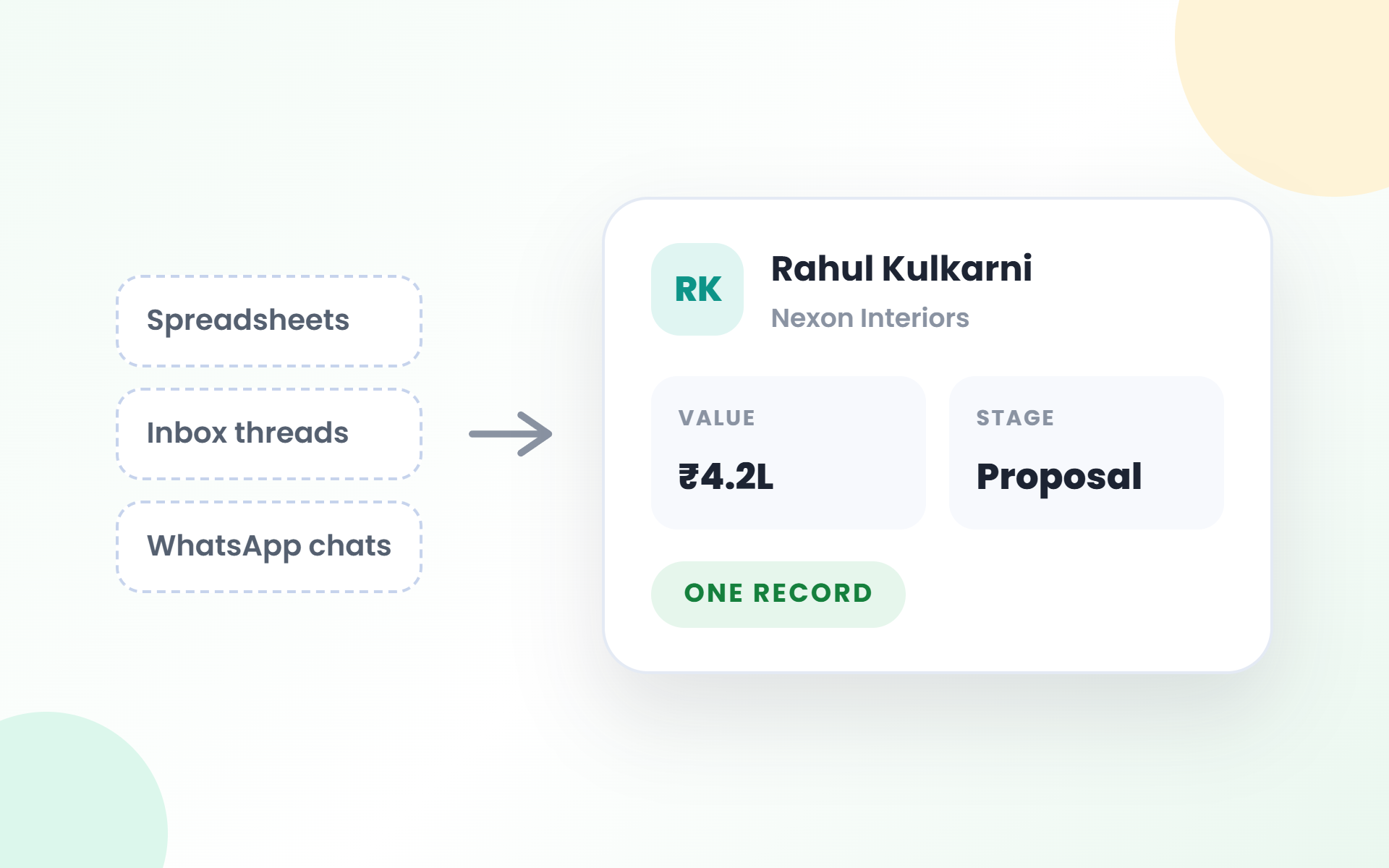
However, event leads frequently end up scattered across spreadsheets, notebooks, business cards, or personal contact lists.
By assigning every lead to its originating event, businesses can answer questions such as:
- Which event produced the most qualified leads?
- Which conference delivered the highest ROI?
- Which industries showed the most interest?
- Which events should we attend next year?
Good attribution transforms networking into measurable business value.
5. Phone Calls & Messaging Apps
Many customers still prefer to make an initial inquiry by phone or messaging platforms such as WhatsApp.
If these conversations aren't automatically captured in your CRM, they become invisible to reporting.
Tracking these channels helps businesses understand:
- How many leads originate from phone calls
- Which campaigns drive WhatsApp inquiries
- Average response times
- Conversion rates by communication channel
Modern lead management should extend beyond web forms to every customer touchpoint.
The Hidden Cost of Poor Lead Attribution
When businesses fail to track every lead source, they often experience:
- Inaccurate marketing ROI
- Poor sales reporting
- Missed optimization opportunities
- Incorrect budget allocation
- Unreliable forecasting
- Duplicate lead records
- Incomplete customer journeys
Over time, these blind spots make it harder to understand what's actually driving business growth.
Best Practices for Lead Source Tracking
An effective lead management process should include:
- Standardized lead source categories
- Required lead source fields during lead creation
- Automatic attribution wherever possible
- Separate tracking for online and offline channels
- Regular audits of lead source data
- CRM integrations with forms, telephony, and messaging platforms
The goal isn't to create more reports—it's to make better business decisions based on accurate data.
Why Comprehensive Lead Tracking Matters
Every customer interaction tells part of the story.
Whether someone discovers your business through a referral, walks into your office, responds to a cold call, attends an event, or sends a WhatsApp message, their journey should be captured from the very first touchpoint.
Organizations with complete lead attribution gain clearer insights into customer acquisition, improve resource allocation, and make more informed decisions about where to invest their sales and marketing efforts.
The businesses that grow fastest aren't always the ones generating the most leads—they're the ones that understand where their best leads come from.