For many growing businesses, Excel starts as the perfect customer management tool.
It's familiar, flexible, and easy to use. You can quickly create columns for names, phone numbers, email addresses, follow-up dates, and deal values.
But as your business grows, so do your customers—and that's when spreadsheets begin to create more problems than they solve.
If your team is still managing customers with Excel, you're probably spending more time updating data than building relationships.
Here's why it's time to move beyond spreadsheets and adopt a better way to manage customers.
Why Businesses Start with Excel
There's nothing wrong with using spreadsheets in the early stages.
They're:
- Easy to create
- Low cost
- Familiar to everyone
- Flexible for different use cases
For a handful of customers, Excel works well.
The challenge begins when customer interactions become more frequent and multiple team members need access to the same information.
The Problems with Managing Customers in Excel
Information Gets Outdated
Customer details change frequently.
Phone numbers, email addresses, company names, and contacts are updated regularly.
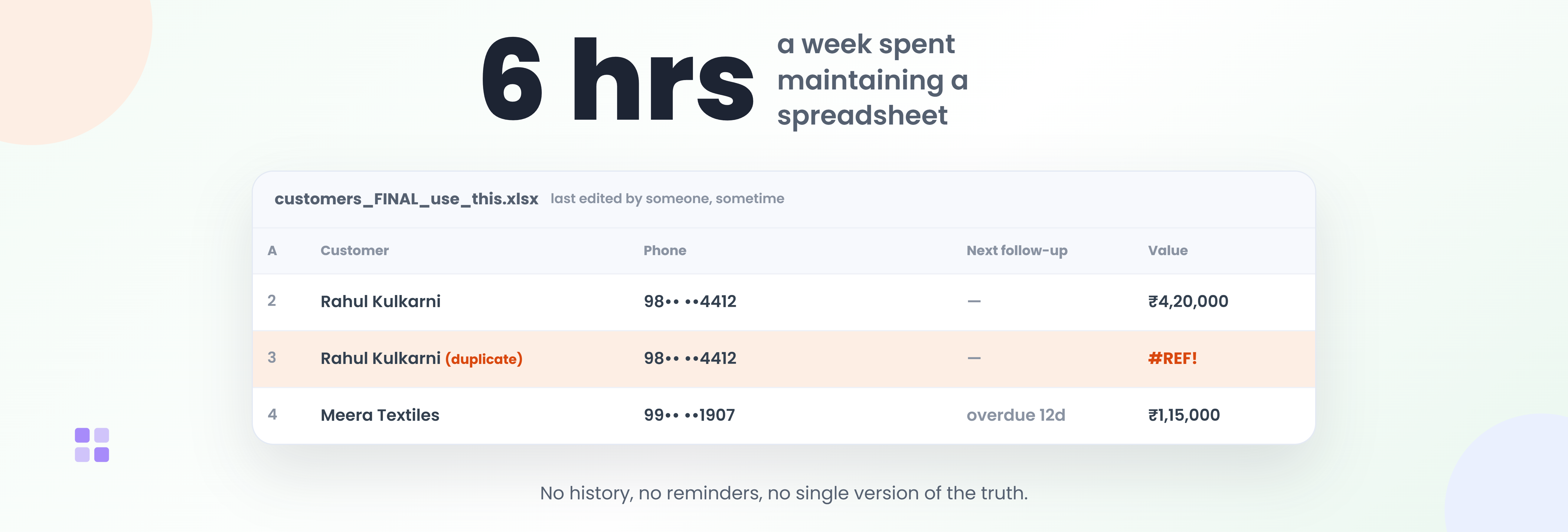
With spreadsheets, it's difficult to know whether everyone is working from the latest version.
This often results in duplicate files, outdated records, and conflicting information.
No Complete Customer History
A spreadsheet can store names and phone numbers—but it can't easily answer questions like:
- When was the customer last contacted?
- Who spoke with them?
- What was discussed?
- Which products were they interested in?
- Have they received a proposal?
Without context, every conversation starts from scratch.
Follow-Ups Get Missed
Sales success often depends on timely follow-ups.
Excel doesn't automatically remind your team to:
- Call a prospect
- Send a proposal
- Schedule a demo
- Renew a contract
- Check in with existing customers
Instead, businesses rely on calendars, sticky notes, or memory—which inevitably leads to missed opportunities.
Collaboration Becomes Difficult
As teams grow, multiple people need access to customer information.
With spreadsheets, this often leads to:
- Multiple file versions
- Conflicting edits
- Accidental deletions
- Limited visibility
- Confusion over ownership
A growing sales team needs real-time collaboration, not file sharing.
Reporting Takes Too Long
Want to know:
- How many new customers arrived this month?
- Which sales representative closed the most deals?
- Which lead source performs best?
- What is your current pipeline value?
In Excel, these reports usually require manual filtering, formulas, and pivot tables.
As data grows, reporting becomes increasingly time-consuming.
A Better Way: Use a Customer Management System
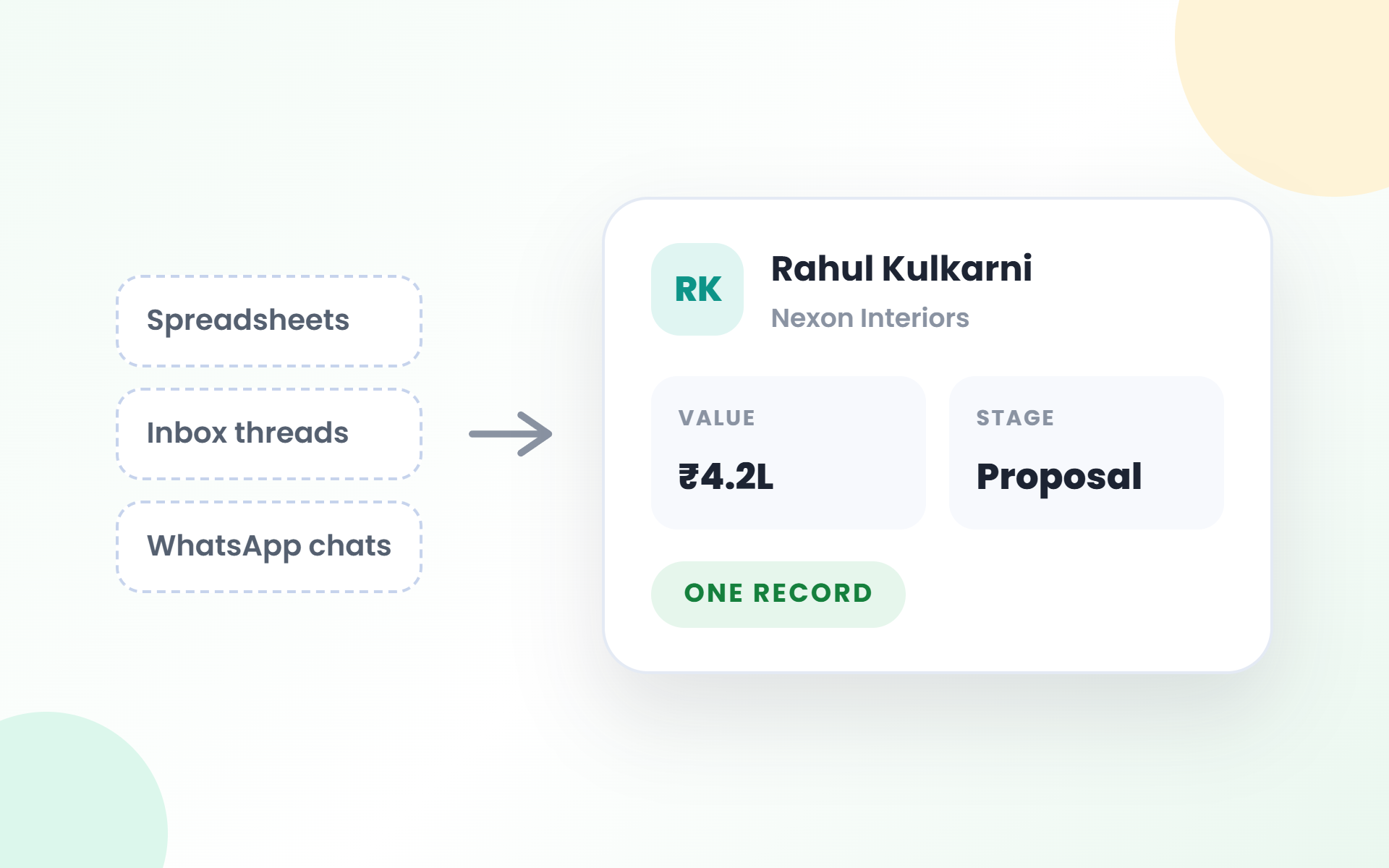
A Customer Management System (CMS) or CRM replaces scattered spreadsheets with one centralized platform where every customer interaction is recorded automatically.
Instead of managing rows and columns, you manage relationships.
Everything your team needs is available in one place.
What Changes After Moving Away from Excel?
Centralized Customer Profiles
Every customer has a complete profile including:
- Contact details
- Company information
- Communication history
- Notes
- Documents
- Tasks
- Timeline of activities
No more searching through multiple files.
Automatic Follow-Up Reminders
Never forget another customer.
The system automatically reminds your team about:
- Calls
- Meetings
- Proposal follow-ups
- Renewals
- Pending tasks
This keeps opportunities moving through the sales pipeline.
Better Lead Management
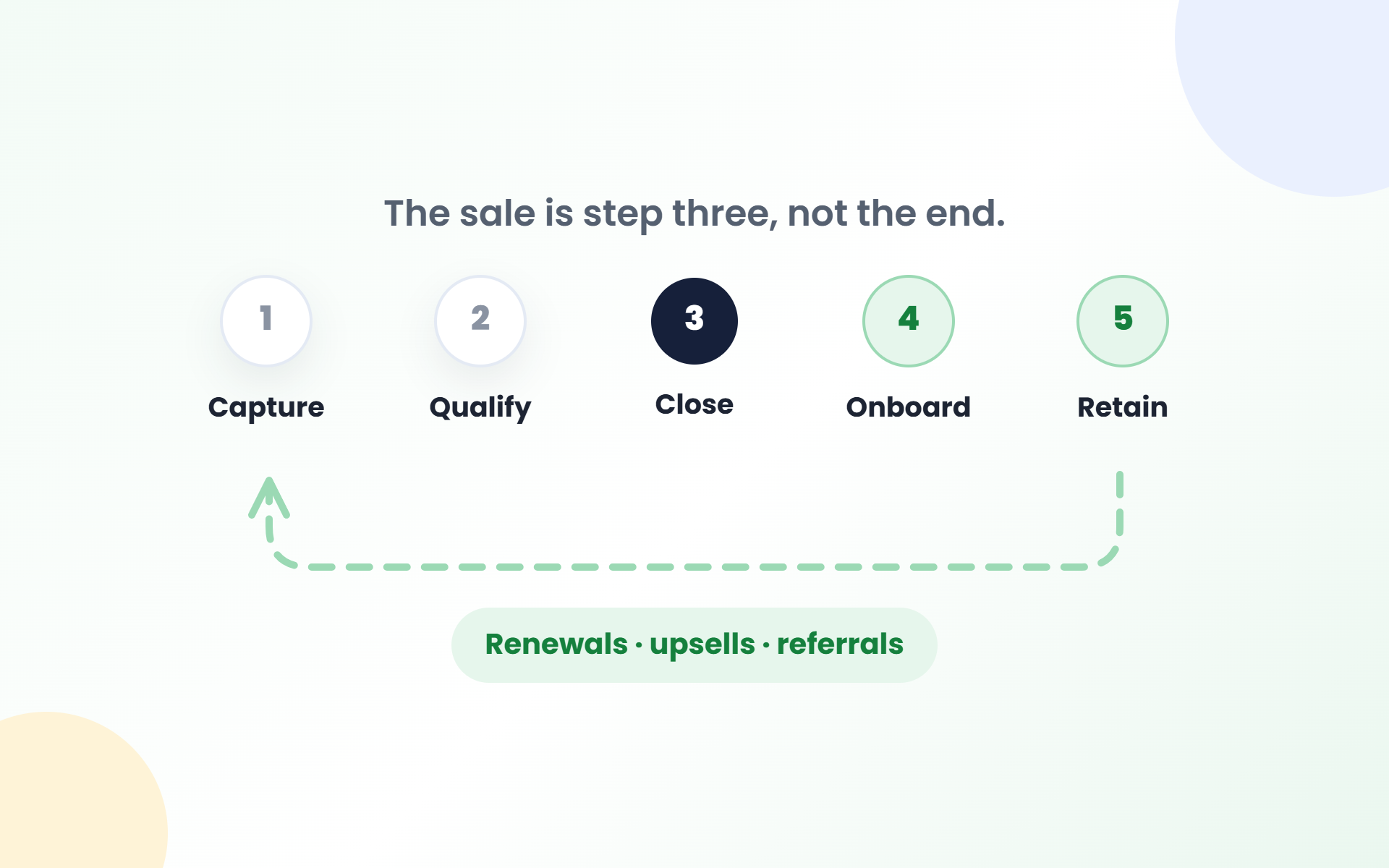
Instead of manually entering leads into spreadsheets, businesses can automatically capture leads from:
- Website forms
- Landing pages
- Phone calls
- Referrals
- Events
Every lead enters the same system, ready for assignment and follow-up.
Real-Time Collaboration
Everyone works from the same customer record.
Sales, marketing, support, and management all have access to the latest information without emailing spreadsheets back and forth.
This improves teamwork and reduces errors.
Powerful Reporting
Modern customer management platforms generate reports instantly.
Track:
- New leads
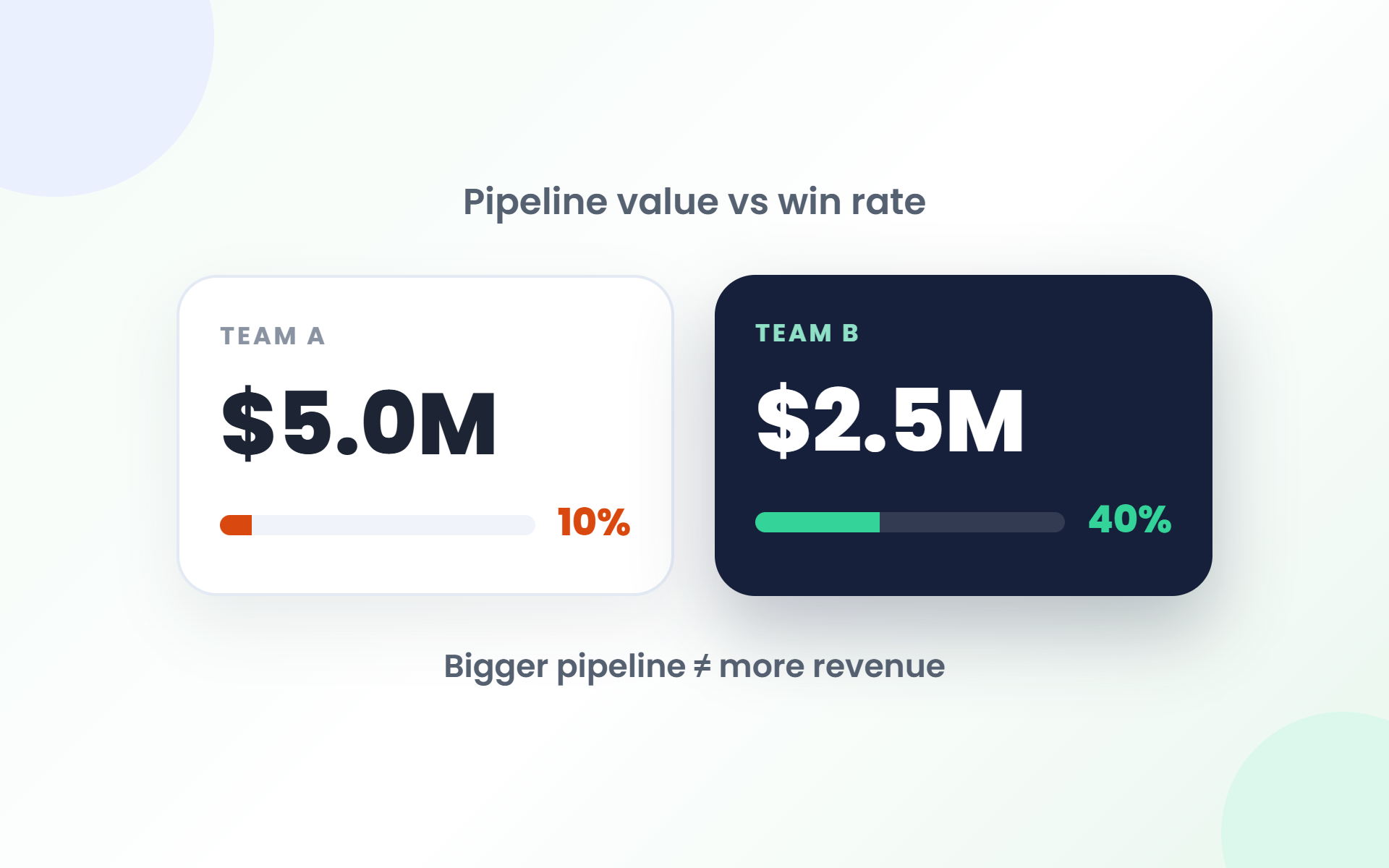
- Sales pipeline
- Win rate
- Lead sources
- Revenue forecasts
- Team performance
- Customer activity
Instead of spending hours creating reports, your team spends time acting on them.
Signs You've Outgrown Excel
It may be time to move beyond spreadsheets if:
- Your customer list keeps growing.
- Multiple employees update the same file.
- Follow-ups are frequently missed.
- You manage leads from multiple channels.
- Reporting takes hours.
- Duplicate customer records are common.
- Customer information is spread across different files.
- Your sales pipeline is difficult to track.
If several of these sound familiar, spreadsheets are likely slowing your business down.
How to Transition Smoothly
Moving away from Excel doesn't have to be complicated.
A simple migration process includes:
- Clean your existing customer data.
- Remove duplicate records.
- Import contacts into your new system.
- Define your sales stages.
- Train your team.
- Stop updating spreadsheets once migration is complete.
The sooner everyone works from a single system, the sooner your business benefits.
Why Growing Businesses Make the Switch
Businesses don't abandon Excel because it's a bad tool.
They move on because their customer relationships become too valuable to manage manually.
As customer expectations increase, businesses need faster access to information, better collaboration, automated follow-ups, and accurate reporting.
Dedicated customer management software delivers all of these without the limitations of spreadsheets.
Final Thoughts
Excel is an excellent starting point—but it isn't designed to manage modern customer relationships.
As your business grows, spreadsheets become harder to maintain, more prone to errors, and less effective for collaboration. A dedicated customer management system gives your team a centralized view of every customer, automates routine work, and provides the insights needed to make better business decisions.
The goal isn't just to replace spreadsheets—it's to create a more organized, efficient, and scalable way to manage your customers.